With the inaugural central executive committee (CEC) of Your Party beginning its term of office on February 27th, it’s now time to seriously organise to get socialism on the ballot paper in the elections taking place on May 7th – with the official deadline for candidates’ nomination papers to be submitted to councils’ Electoral Services departments just weeks away.
And the election battlefield has just got bigger! After yet another U-turn by Keir Starmer’s increasingly beleaguered government – reinstating elections in 30 councils which it had previously cancelled – there will now be 136 local authorities going to the polls this year, alongside the contests for the Scottish Parliament and Welsh Senedd. A full list is available at https://www.tusc.org.uk/wp-content/uploads/2026/02/Elections-directory-2026-FINAL.pdf
Of the councils with elections in May, 73 are currently led by Starmer’s Labour Party, with 2,200 or so Labour councillors defending their seats. With no deposits needed to stand in local elections, everyone who was inspired in July last year by Jeremy Corbyn and Zarah Sultana’s call for a new party to take on the rigged system should ask themselves: why couldn’t I be on the ballot paper to help build an alternative to the establishment parties?
The opportunities that May provides
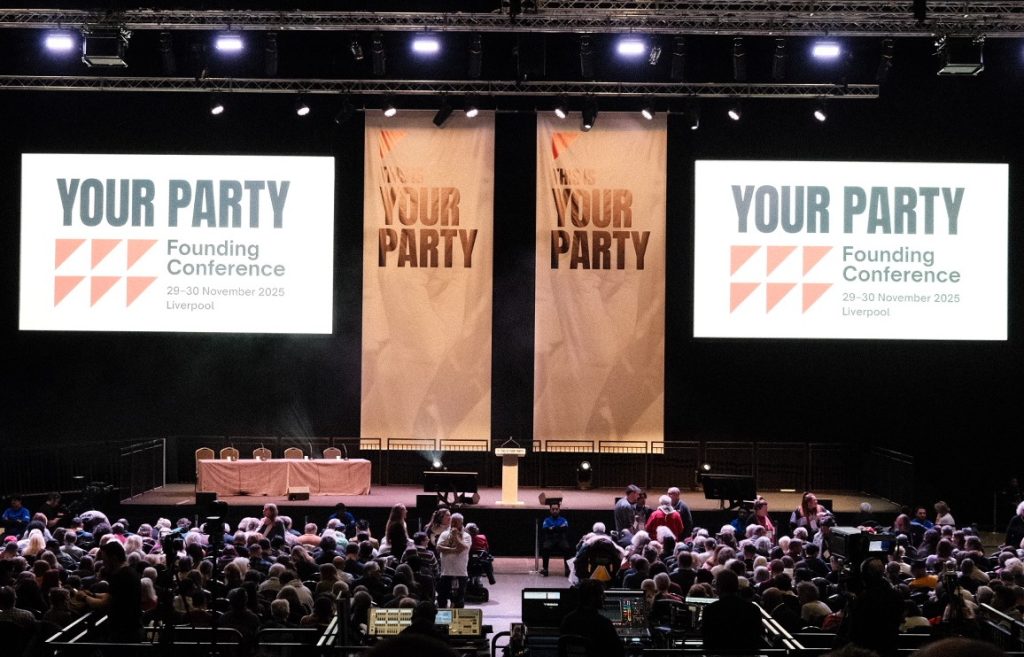
The process of moving from last summer’s declaration for a new party to actually establishing its first elected leadership body has indisputably been a fraught one. Serious differences have come to the surface and disappointingly the potential that was there at the outset for a new mass workers’ party to be formed has not been realised. Nevertheless Your Party has been established and its members and supporters could still play an important role in what lies ahead.
The Trade Unionist and Socialist Coalition (TUSC), which as it says is a coalition of leading trade unionists and socialists from different organisations or none, has not ‘chosen sides’ – but offered instead its support to all steps towards the still vital goal of a new mass party of the working class, including a serious intervention in the May elections. It was TUSC supporters, for example, who sponsored the amendment at the November Your Party conference to “prepare for the May elections with a bold anti-austerity stand”, including by the organising of local No Cuts ‘People’s Budget’ conferences.
This amendment, which also recognised the “huge opportunity” that the 2026 local elections in particular offered to socialists to “expose and cut across all the pro-austerity parties, not least Reform UK”, was agreed by a 90% yes vote. The hope of Your Party members and supporters now will surely be that the differences of the past few months won’t stop the election opportunities identified then from being seized. And not in local areas only, which unfortunately will not have an impact on the national political debate, but across the country – by achieving the widest possible presence for a socialist alternative, including in the media.
But that means standing a sufficient number of candidates. The official Ofcom threshold for the number of local election candidates needed to qualify for a legally prescribed minimum ‘fair media coverage’ is 840 – one in six of the around 5,000 council seats up for election. Surely the chance for Jeremy and Zarah to appear in party election slots which must be carried by all broadcasters on all their platforms won’t be spurned? The ‘fair media coverage’ also legally obliges the broadcasters to cover a manifesto launch and ensure participation in regional debates and discussion shows, and mentions in news reports on both TV and radio, setting the tone for broader media coverage.
Is this not worth fighting for? And if it is, is it really inconceivable that from the tens of thousands of socialists, trade unionists, anti-war protestors and community campaigners who responded to the summer 2025 call, 840 candidates couldn’t be found? Without, remember, any election deposits being necessary – the £500 charge made on candidates in parliamentary and mayoral elections – which don’t apply when standing for a council seat?
In reality, what’s at stake is either a fragmented election campaign, probably with some local highlights but not properly recognised nationally, or the possibility of a campaign that combines the local highlights with a national presence. Think, for example, what the narrative will be from the elections on May 8th, the day after polling day, if even the best results won by Your Party supporters are buried in the ‘others’ column? While Reform, and probably the Greens and the Liberal Democrats positioning as the ‘progressive alternatives’ to Starmer’s Labour in England, are portrayed as the gainers?
There are still practical questions that need to be resolved to achieve a national challenge; not least how to meet the Ofcom stipulation that the ‘fair media coverage’ threshold applies only to candidates that appear on the ballot paper using the name of a party registered with the Electoral Commission or one of its supplementary ‘registered descriptions’.
That is why TUSC, with the experience of organising hundreds of candidates in an election network – 748 was our peak number, in 2015 – has reached out to the new Your Party CEC for urgent discussions. Meanwhile, we carry below a Q&A guide to some of the questions around this issue that may be in the minds of Your Party supporters.
But our basic appeal is simple – not to miss the opportunities that are there in May but to help get socialism on the ballot paper! ■
Elections 2026 Q&As
Is TUSC saying it will stand against Your Party candidates?
No, absolutely not. This is explained in more detail in our annual Guide for Candidates and Agents in the Local Council Elections at https://www.tusc.org.uk/wp-content/uploads/2026/02/2026-Guide-for-Candidates-Agents.pdf – with a section in this year’s guide entitled ‘TUSC will not compete with Your Party where it stands’.
But as was recognised in the founding documents of Your Party, discussed at its conference in November 2025 and agreed in an online ballot, the 2026 local elections will be a “unique case” for the party given the “time constraints” of the official nomination process for the elections and “the absence of agreed branch structures”.
But with the CEC in place, won’t it be easy to authorise Your Party candidates in May?
It won’t be simple, as the timelines agreed in the Your Party Constitution and Standing Orders show. These rules say that branches “shall be established through the holding of inaugural all-member meetings, which must be attended by 20% of party members in a constituency to be quorate”, with all party members “invited at least fourteen days before any such local meeting occurs”. For the selection of candidates they mandate “a full candidates primary process, which includes democratic longlisting and shortlisting involving local party members”.
The immovable, legal deadline for official nomination papers to be handed in to councils’ Electoral Services departments is April 9th. That is almost certainly why the Your Party First Year Organisational Strategy founding document agreed in November said that the 2026 elections would be “unique”.
Couldn’t the new CEC speed up the Your Party procedures?
Possibly, if there is goodwill on all sides. But the officers of Your Party registered with the Electoral Commission – the formal ‘registered officers’ who are currently listed as Jeremy Corbyn (the registered Leader), Marion Roberts (the Treasurer), and Andrew Jordan (the Nominating Officer) – will no doubt be wary of departing from the agreed rules, not least because they are the legal custodians of the party.
One rule, for example, is the stipulation in the founding documents that “the party will agree not to support any candidate where there is any unresolved local conflict”. This would include disputes over improperly convened meetings, irregular candidate selections, and so on.
That’s why TUSC is seeking an honest assessment from the new CEC. Do they have both the desire to get 840 candidates authorised before April 9th, and the capacity to do so?
But isn’t it sufficient to just have a mix of candidates standing, as TUSC, independents and other local registered parties?
Not to reach the ‘fair media coverage’ threshold it isn’t, unfortunately, and the possibility of a nationally impactful campaign.
The broadcasting authorities are only legally obliged to include candidates in the qualifying threshold figure who appear on the ballot paper using a description of a registered party. Appearing on the ballot as an independent, or under the name of different local parties registered with the Electoral Commission, will not count towards the ‘fair media’ threshold, even if 840 such candidates all declare they are part of an alliance.
It has to be one registered party which, of course, Your Party is – as is TUSC.
But isn’t Trade Unionist and Socialist Coalition a confusing name to have on a ballot paper?
That argument has been raised, although often countered with the point that it’s actually quite clear and explicit – this candidate is part of a coalition uniting trade unionists and socialists.
But qualification for the ‘fair media’ threshold applies not just to candidates who use the registered party name on the ballot paper – in this case, Trade Unionist and Socialist Coalition – but also to those who use one of its ‘registered descriptions’. And TUSC has a number of registered descriptions available to be used, including Independent Trade Union and Socialist Candidate, Socialist and Trade Union Candidate, Trade Unionists and Socialists Against Cuts, and Trade Union and Socialist Candidate as well as the registered name, Trade Unionist and Socialist Coalition.
Clearly none of these may be the preferred option of many Your Party supporters but, in these “unique” circumstances, if it means getting Jeremy and Zarah on our TV screens isn’t that a reasonable compromise to make? And all the descriptions do have the advantage of saying which side of the class division of wealth and power candidates would be on.
Using a registered description also entitles a candidate to use, if they wish, an accompanying distinguishing emblem on the ballot paper too (see the TUSC entry with the Electoral Commission at https://search.electoralcommission.org.uk/English/Registrations/PP804). Otherwise there can only be a blank space next to the candidate’s name.
But this is optional. If someone just wants to use a description without an emblem, they can and they would still be helping reach the ‘fair media’ threshold. It’s the candidate’s choice.
But won’t appearing with a TUSC description on the ballot paper throw away the profile-building work that community independent candidates have done?
No, it shouldn’t do. Candidates using TUSC descriptions have full control over their own campaign. The name, logo, policies and contact information of the local community independent group can be included in all election campaign material as prominently as the candidate wishes.
That actually is the TUSC model of organisation which, over the years, has enabled many community groups and different socialist parties to contest elections within its umbrella without in anyway feeling that their ability to promote themselves has been restricted.
So using a TUSC description doesn’t oblige candidates to feature the, limited, TUSC core policies in their campaign?
No, it doesn’t. The TUSC core policies are the minimum commitments prospective candidates have to make when they apply to use a TUSC description in an election. For the 2026 local elections they are ‘the six TUSC guarantees’, posed as what “voters should know that any councillor elected under the TUSC banner” will deliver (see https://www.tusc.org.uk/policies/).
In simple terms, if a prospective candidate is not prepared to commit, for example, to the pledges to “oppose all cuts and closures to council services, jobs, pay and conditions” or “fight for united working-class struggle against racism, sexism and all forms of oppression” they will not be able to use a TUSC description.
But what candidates highlight in their actual election material, including on issues that go beyond – yes what is – a limited core policies platform, is in their control.
But don’t TUSC candidates get poor results?
Compared to Jeremy Corbyn’s triumph in Islington North in July 2024, and some of the other scores achieved by the Gaza independents, absolutely. But not compared to other left-wing electoral formations historically, from Arthur Scargill’s Socialist Labour Party, the Socialist Alliance, the Ken Loach-initiated Left Unity, to the former North of Tyne metro-mayor Jamie Driscoll’s short-lived Majority party. And of course now we are in new situation of a deeply unpopular Labour government in office, in which the arguments for a socialist alternative are even more powerful.
On TUSC’s results, excluding the 60% vote won by the TUSC candidate in a South Yorkshire tier-three town council seat in a straight contest with Labour (a tier-three council has less powers than a county, borough or district council), we have won 40% plus votes where our candidate was a sitting or former councillor, benefiting from the recognition of the solid but unspectacular work that a conscientious councillor does supporting residents in a range of issues from education and housing to planning hearings and community services. Our highest score in circumstances other than these has been the second place finish with 32.2% of the vote in Southampton’s Bevois ward in May 2024, which before then was the safest Labour seat in the city.
■ In conclusion TUSC is not, and has never presented itself to be, the broader vehicle of working-class political representation that is needed but rather a lever to help bring it about. It is in that spirit that we making our appeal. If Your Party cannot get sufficient candidates to reach the ‘fair media’ threshold this May, using the TUSC descriptions seems to us to be the only means available to achieve an electoral campaign with the possibility of having a meaningful socialist presence in the national political debate.